Interactive Displays: Touch Panels and Interactive Video Walls
Should you choose a single touch panel or an interactive video wall? This guide explains the options, the touch technology and the sizes — then EKINTRY quotes the right one factory-direct.
From US$100 — final price depends on your size, pixel pitch and finish. Contact us for an exact quote.
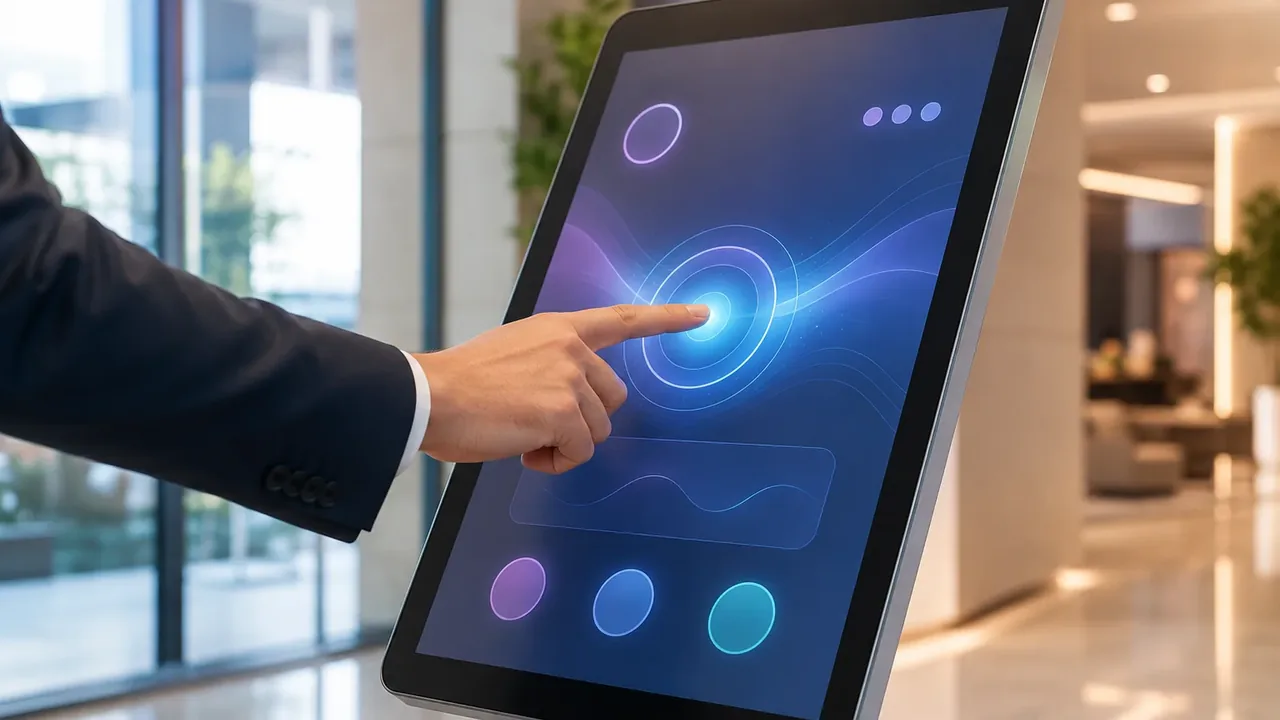
An interactive display is a touch screen that combines a whiteboard, computer, presentation screen and collaboration hub in one. The first decision is the form: a single interactive flat panel (IFP) for a room, or a larger interactive video wall for a big space — and whether you need a touch layer on it at all.
This hub explains the choices — panel vs video wall, touch technology and sizing — and links to the specific products. EKINTRY supplies all of them factory-direct, built or specified to your room.
Who custom screens are for
- Schools, universities and training centres.
- Corporate meeting and board rooms.
- Retail, museums and visitor centres with touch kiosks/walls.
- AV integrators specifying interactive rooms.
Interactive flat panel vs interactive video wall
The core choice is size and how it is built. A flat panel is one sealed screen; a video wall is many LED panels tiled into a much larger image, with touch added by an overlay.
- Interactive flat panel (IFP) — a single screen, typically 55–98″, ideal for classrooms and meeting rooms.
- Interactive video wall — multiple LED panels from ~138″ up to 220″+, for large venues and lobbies.
- Touch overlay — adds multi-touch to an LED or LCD video wall when you need interaction at scale.
Touch technology and sizes
Most IFPs use infrared (IR) or projected-capacitive (PCAP) touch, supporting up to 32 touch points for true multi-user work. 65–75″ is the sweet spot for a classroom or small-to-medium meeting room; larger rooms move to 86–98″ or a video wall.
Best for — and when it is the wrong choice
Match the form to the room:
- Right for: collaboration, teaching, presentations and self-service where people touch the screen.
- If no one needs to touch it, a standard display or LED wall is cheaper.
- A single IFP cannot fill a large hall — that is a video-wall job; a video wall is overkill for a small meeting room.
How interactive displays are priced
IFPs are priced per unit by size, touch technology and the built-in system (Android, optional Windows OPS). Interactive video walls are priced like LED walls (by pixel pitch and area) plus the touch overlay. We quote the exact configuration factory-direct.
Common mistakes to avoid
Where buyers go wrong:
- Buying a panel too small for the back of the room — check the farthest viewer.
- Paying for touch when the use case never needs it.
- Choosing a video wall for a small room, or a single panel for a large hall.
- Overlooking the operating system and software the team actually needs.
| Flat panel (IFP) | 55 – 98″, single screen |
|---|---|
| Interactive video wall | ~138 – 220″+, tiled LED + touch overlay |
| Touch | IR or PCAP, up to 32 points |
| Sweet spot | 65–75″ for classrooms/meeting rooms |
Send us your project details
To recommend the right screen size, pixel pitch, cabinet type and shipping, please send us:
- Room size and farthest viewer distance.
- Panel or video wall.
- Touch needed, and for how many users.
- Operating system / software requirement.
- Delivery country.
Frequently Asked Questions
What is the difference between an interactive display and a video wall?
An interactive display (IFP) is a single touch panel, usually 55–98″. A video wall is many LED panels tiled into a much larger image (138–220″+); touch is added with an overlay when needed.
What size interactive panel do I need?
65–75″ suits most classrooms and small-to-medium meeting rooms; larger rooms use 86–98″ or a video wall. Check the farthest viewer distance.
What touch technology is used?
Infrared (IR) or projected-capacitive (PCAP), commonly supporting up to 32 touch points for multi-user collaboration.
Can a big LED video wall be interactive?
Yes — a touch overlay adds multi-touch to an LED or LCD video wall when you need interaction at large scale.
How are interactive displays priced?
Flat panels are priced per unit by size, touch and system; interactive video walls are priced by pixel pitch and area plus the touch overlay. We quote the exact setup factory-direct.
Do they run Android or Windows?
IFPs typically run Android with an optional Windows OPS module so you can run Windows software directly.
Are interactive LED screens the same as interactive flat panels?
They overlap but differ in technology. An interactive flat panel is a single LCD touch screen (typically 55–98″). An interactive LED screen or wall is built from LED modules to any size, with a touch overlay, for large or custom formats beyond a single panel. We supply both and recommend by room size and budget.